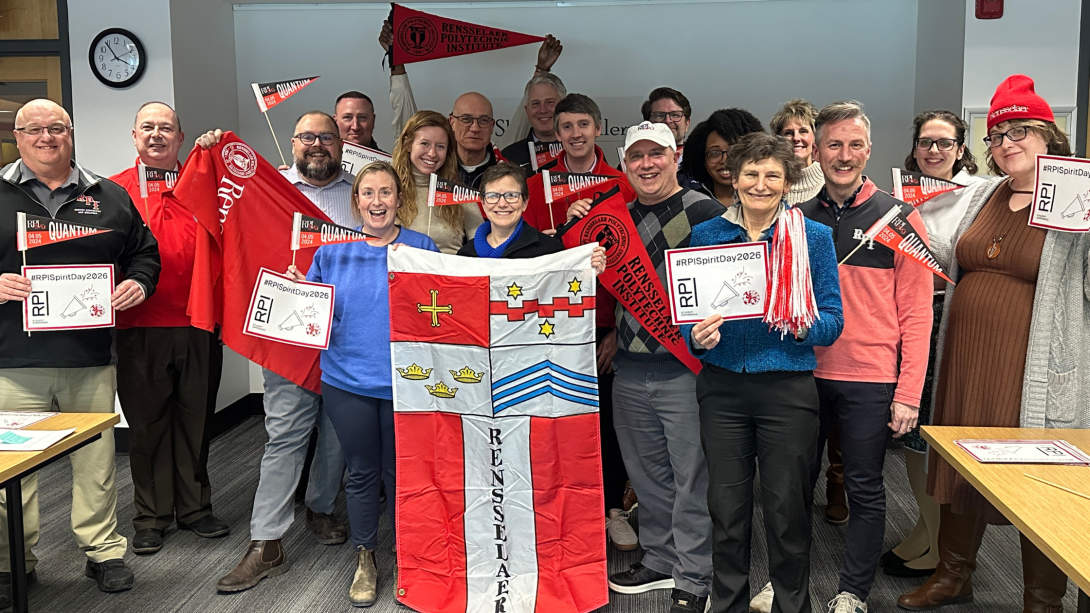
Exceptional student experiences begin with engaged, supported, and continually developing staff. Throughout 2025–2026, Student Experience invested in the people who deliver programs and services across the Division, with an emphasis on professional growth, collaboration, assessment, leadership development, and organizational effectiveness. Following divisional restructuring, this work also focused on strengthening connections across departments and building a more integrated Student Experience organization capable of responding to the evolving needs of RPI students.
Student Experience was named one of ACPA’s 2026 Most Promising Places to Work in Student Affairs, recognizing its commitment to inclusion, staff satisfaction, and professional growth. The honor reinforces our commitment to improving the staff experience.
Our Staff Drive Student Success
Building One Student Experience Division
Student Experience strengthened cross-functional collaboration following the divisional reorganization, creating new opportunities for staff to coordinate services, share expertise, and approach student needs collectively. The goal was not simply greater collaboration among staff, but a more connected experience for students navigating programs and services across the Division.
Increased cross-departmental collaboration | CARE Collaborative connected multiple areas of student support | Residential Education Advisory Board supported shared approaches to residential education | Integrated healthcare, accessibility, and assessment initiatives brought together expertise from across RPI | Establishment of the Student Success Center, bringing together academic support resources in one location
Investing in Professional Growth
The new Professional Development Committee established a divisional structure for creating intentional learning, networking, and leadership-development opportunities for staff. Its work focuses on making professional development an ongoing component of the Student Experience culture rather than a series of isolated opportunities.
Professional Development Committee established | New staff onboarding experience introducing new employees to the vision, mission, and values of the Division | Expanded cross-training opportunities | Increased sharing of expertise and best practices across functional areas
Creating a Culture of Assessment
The new Assessment Committee brought together representatives from across Student Experience to develop a more consistent and collaborative approach to measuring effectiveness. The committee is working to strengthen assessment practices, improve data collection and reporting, and better demonstrate the Division's impact through measurable student outcomes.
Assessment Committee established | Common assessment practices were developed across departments | Greater consistency in data collection and reporting | Utilizing assessment outcomes to improve programs and services | Multiple cross-division trainings to establish base-level knowledge of assessment across the Division
Supporting Leadership at Every Level
Professional and leadership development occurred throughout the Division and extended to professional staff, student employees, peer educators, graduate interns, and campus partners. These opportunities reflect an approach in which leadership development is embedded throughout the organization rather than limited to formal supervisory roles.
Archer Center's Train-the-Trainer model expanded leadership development | Graduate counseling internship opportunities expanded | Leadership development strengthened for Resident Assistants, student employees, and student organization advisors
Advancing Professional Expertise
Student Experience staff strengthened their expertise through professional conferences, specialized training, certifications, scholarship, and institutional presentations. These opportunities expanded professional knowledge across the Division while supporting a culture of continuous learning and bringing emerging practices back to RPI.
6 national conferences and professional workshops attended by staff | 5 specialized trainings and professional certifications completed | 3 scholarly publications or accepted book chapters and proposals contributed | 2 significant institutional presentations and professional development programs delivered or supported at RPI | Expanded expertise in Access & Neurodiverse Student Success to support a shift toward a student empowerment model of disability
Strengthening Organizational Effectiveness
Student Experience worked to set clear expectations and evaluate performance against expectations. In particular, we focused on the goal of creating a kinder, gentler, and easier-to-navigate RPI while maintaining high standards for students. We are focused on creating a collaborative environment that thinks strategically in a resource-constrained environment.
More than one-third of position descriptions across Student Experience revised | Outside consultants engaged to improve Student Health and Wellness, Access and Neurodiverse Student Success, and the Center for Career and Professional Development | Athletic training oversight restructured
Looking Ahead
Student Experience will continue to invest in the staff who make student success possible.
Priorities include:
- Expanding professional development opportunities for staff across the Division.
- Creating Staff Experience Standing Committees to improve the employee experience across multiple dimensions in the Division of the Student Experience.
- Strengthening the Professional Development Committee as a catalyst for learning and collaboration.
- Implementing a unified assessment framework through the Assessment Committee.
- Enhancing onboarding and mentoring for new employees.
- Increasing cross-training and shared learning opportunities across departments.
- Continuing to foster open communication, transparency, and trust between staff and leadership.
- Supporting staff wellbeing while building an organizational culture centered on continuous improvement, innovation, and student success.